
Billye Toussaint (she/her)
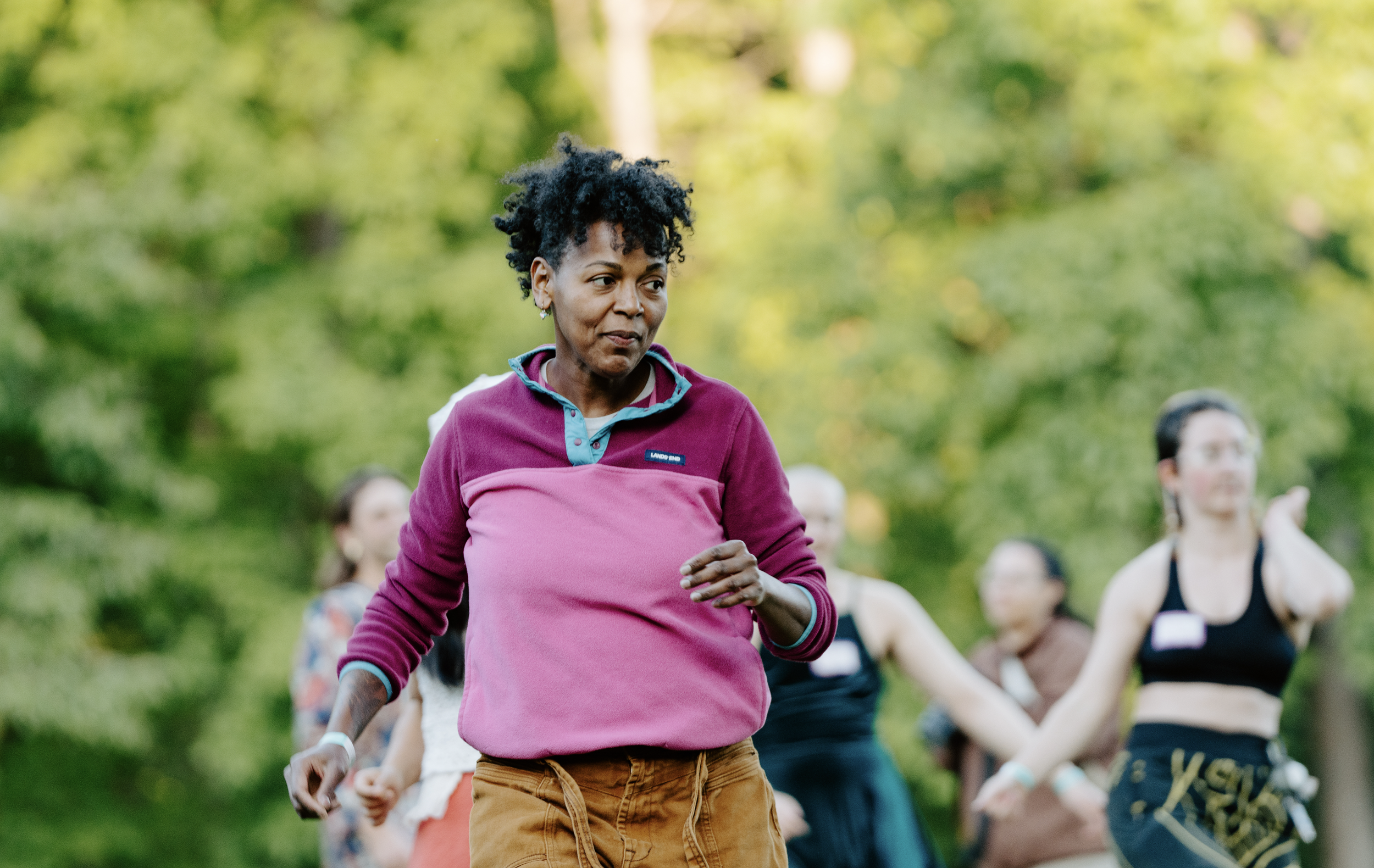
Photo by Keely Wells
One of the aspects of Flash Foxy that moved me most was seeing what it looked like for a group of adults to engage in community as climbers. I have always gone climbing with a guide and usually with a group of beginners — typically people who did not previously know one another, with one or two guides who become the de facto leaders of the group. It was novel to me to be among adults who organized themselves to climb together.
There was something almost sacred about being with a group of climbers like this. My first job was as a social justice organizer. I helped organize people to buy out their government subsidized housing. I remember being aghast at how poorly many of our meetings went: There were often shouting matches and almost fist fights. The director once shared research with me showing that many working-class people are not members of civic organizations led by one another. We often have not had the opportunity to figure out the social contract of being part of a group that is not ruled by anyone. The climbing meet up showed the wonderful dynamic of people coming together and running something that they loved.
At the meetup, there were inside jokes, shared food, shared equipment, and a lot of support. There was also a lot of waiting around. No one seemed concerned with maximizing time or ensuring everyone was occupied at all times. It felt like the least colonized way of thinking about time and space I had ever experienced.
At one point, a pair of white men came to climb near us, and there was a part of me that instinctively wanted to demure — to insist they should have access to the wall after we had been there for a while. It was obvious that no one else in my group gave this even a second thought. They were comfortable taking up space in ways that would never naturally occur to me. It reminded me of my friend Mardi Fuller, who leads Outdoor Afro and often talks about how middle-class cis white men frequently move through the outdoors as though they own it, while the rest of us are taught to make ourselves small and borrow space from them.
I climbed a wall that was fun and challenging for me, and I was able to watch multiple people climb it beforehand, observing different approaches and beta. The group also encouraged me to try a wall that was beyond my ability. I knew it was too hard for me, but watching so many people climb it effortlessly made me overestimate my own abilities.
When I asked to be lowered halfway up, part of me wanted to feel ashamed — somewhat because I could not do it, but more because I had not actually wanted to climb it in the first place. But then I remembered this gnarly 5.10 that everyone else in the group had tried earlier, a route that absolutely kicked everyone’s ass. Everyone had cheered each other on. Everyone understood when someone hit a wall.
The second aspect of the festival that unexpectedly touched me was the line dancing. I’m from a small town in Ohio, and the last time I line danced was during a middle school gym unit that, in retrospect, was probably just the gym teachers being tired at the end of the year and wanting to keep us occupied. Where I’m from pop country was always playing in the background, and I associated it with the racism that constantly simmered beneath the surface in my town. So when I saw line dancing at Flash Foxy, I approached it with real trepidation.
It was amazing.
Line dancing at Flash Foxy threw everyone out of their comfort zone. It was queer, multiracial, raucous, humbling, and exhausting. I connected with people I otherwise would never have spoken to, often through shared incredulity that we were somehow supposed to move that fast, or through laughing because we kept messing up.
More than anything, it showed me the beauty of being in a queer and multi-racial space, and how laughter and community allowed us to reclaim something that had once carried such a negative connotation for me.